
We study physiology and behaviour to address questions about how fish work and how they deal with environmental challenges such as low oxygen (hypoxia), high temperature, and freshwater acidification. Stress and effects of the glucocorticoid stress hormone, cortisol, are key themes running through our research.
In current projects, we are using dominance hierarchies to study how the stress axis functions during prolonged stress. Prolonged elevation of cortisol lowers thermal tolerance in adult fish and when experienced during early development, lowers thermal tolerance later in life - we are working to identify the mechanisms responsible for these effects. We are also studying individual variation in hypoxia tolerance to determine the relative contributions of physiology (e.g. gill morphology) and behaviour (e.g. use of aquatic surface respiration). Finally, we are using zebrafish lines lacking the serotonin transporter (Sert) to study the roles of serotonin in stress and anxiety-related behaviour, digestive physiology and metabolism, and cardiorespiratory responses to hypoxia.
For an up-to-date publication list, please see Google Scholar.
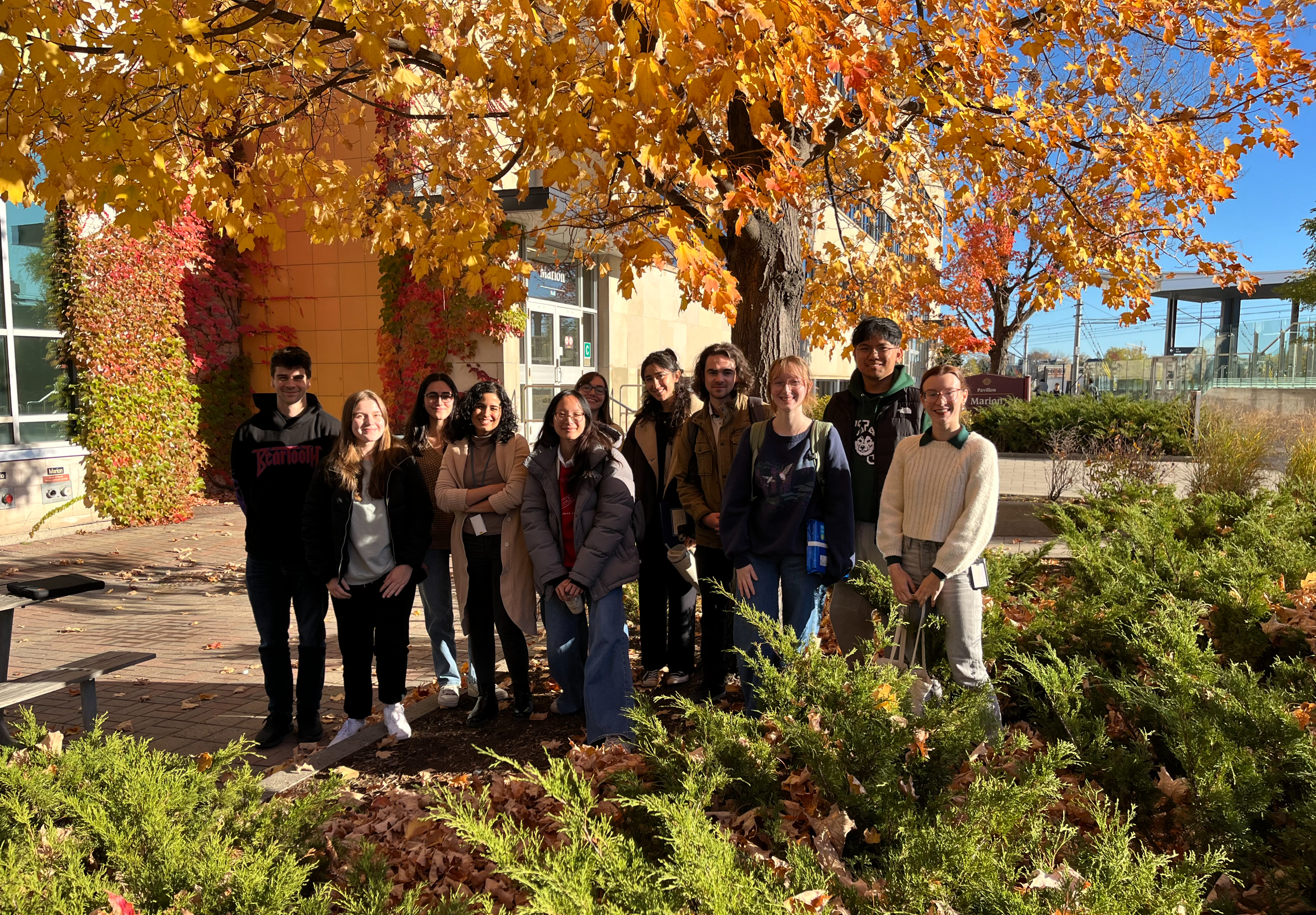
Lab group members from left to right: Ben Harrison, Brenna Scott, Donna St-Amant, Patrícia Ferreira, Kyana Lim, Hannah Stairs, Joëlle Rabay, Liam Frodsham, Brennah Hammond, Michael Tea and Kaitlyn Flear (missing - Iniya Luckshman)
Current lab members
Patrícia Ferreira (PDF)
- The role of Sert in serotonergic regulation of appetite, digestion and metabolism
- Cortisol as a regulator of ion balance during freshwater acidification
Michael Tea (PhD student)
- Effects of Sert knockout on anxiety-related behaviour in zebrafish
- Serotonin and cardiorespiratory responses to hypoxia
Kaitlyn Flear (PhD student)
- The physiological factors and behaviours underlying individual variation in hypoxia tolerance in zebrafish
Donna St-Amant (MSc student)
- The role of FKBP5 in maintaining elevated cortisol levels in subordinate rainbow trout
Ben Harrison (MSc student)
- Zebrafish as a model for choroideremia research
Hannah Stairs (MSc student)
- Developmental programming of thermal tolerance by cortisol
Undergraduate students
- Honours: Liam Frodsham, Kyana Lim and Brenna Scott
- USRO: Iniya Luckshman and Joëlle Rabay
- URS: Brennah Hammond