
Thermally conductive metal matrix composites

State-of-art high thermal conductivity in engineering
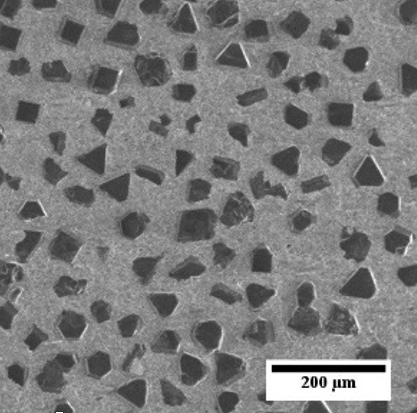
Materials with high thermal conductivity are used as heat sinks or heat exchangers. The state-of-art materials are aluminum and copper, which exhibit 200 W/mK and 400 W/mK, respectively. Unfortunately, these materials cannot keep up with the increasing cooling requirements for modern high-powered engineering systems, and the demand for higher thermal conductivity is high.
Limitation of materials with ultrahigh thermal conductivities
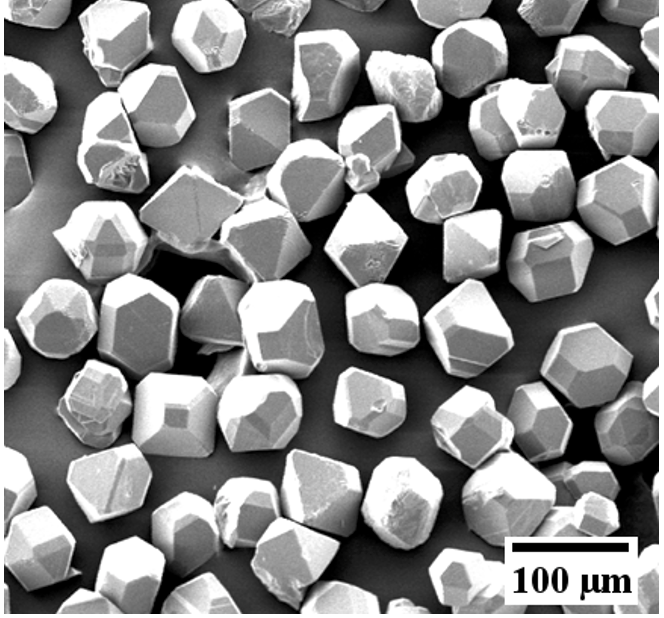
Covalent materials such as diamond and carbon nanotubes exhibit thermal conductivities on the order of ~1000 W/mK, but as heat sink materials, they have several issues including high cost, overwhelmingly high thermal expansion coefficient, and challenging processibility. These issues limit their usages to highly specialized applications. For this reason, material scientists have been embedding these materials in metal matrix to form composite materials as an alternative.
Solution - metal matrix composite materials
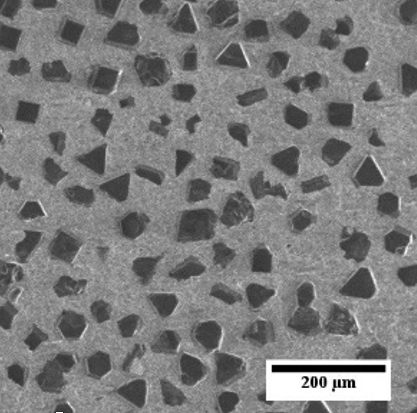
Although not as thermally conductive as pure covalent materials, metal matrix composite materials are advantageous for thermal management applications due to their processibility, reduced raw material cost, tuneable thermal properties. Studies have shown that their thermal conductivities can be much higher than that of copper, which is excellent for heat sink applications in electronic devices or heat exchangers in power plants.
What we study
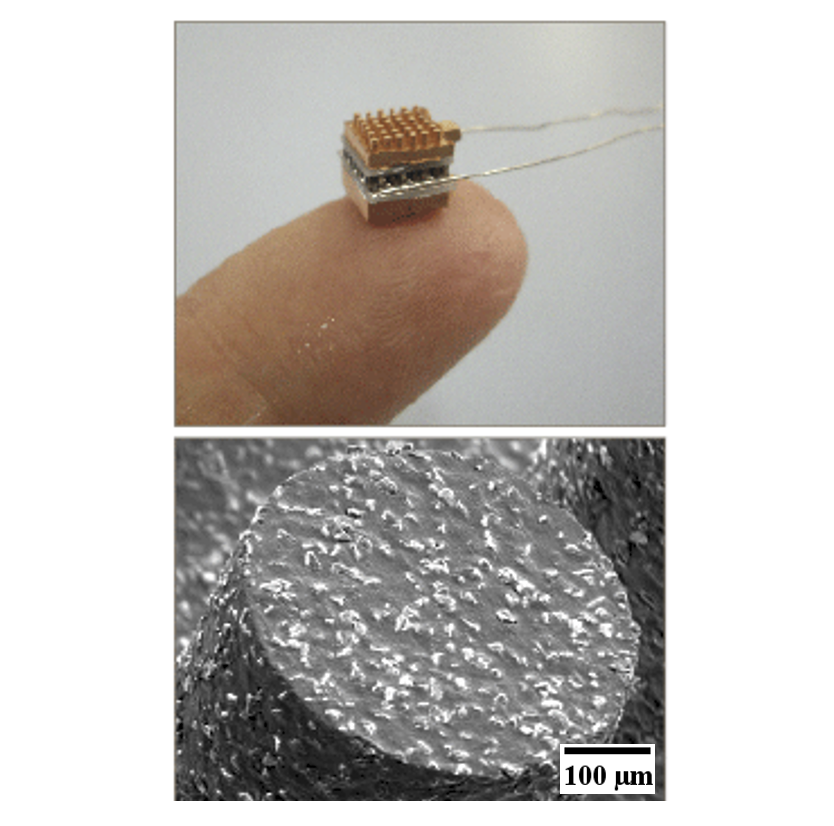
We study various engineering as well as fundamental aspects associated with the thermal properties of thermally conductive metal matrix composite materials. Examples are listed below:
1 - Fabrication cost reduction with electrodeposition
Metal-diamond composite materials require expensive processes that require high temperature and pressure in vacuum, such as vacuum sintering and infiltration. The fabrication cost can be significantly reduced if electrodeposition is used instead.
2 - Engineering aspects associated with application
We are interested in investigating various aspects associated with actual implementation of these composite materials, such as thermal degradation, life cycles, and designing appropriate thermal interface materials.
3 - Secondary phase materials in metal matrix
Carbon based materials such as diamond and carbon nanotubes are currently the most popular for the secondary phase in the composite. We are interested in how these materials can be engineered for better thermal performance as well as exploring new secondary phase materials.
*This project is funded by Natural Sciences and Engineering Research Council of Canada.