Renata Rosol
YKHEMP Project Manager
Department of Biology
rrosol@uottawa.ca
Bio:
Renata holds a Bachelor’s degree in Environmental Biology from McGill University (2002) and a Master’s degree in Public Health from Simon Fraser University (2010).
Her work has primarily focused on community and environmental health, particularly in collaboration with Indigenous communities. Her first project was with a Cree community in Northern Quebec, where she spent two years building relationships, collecting and analyzing fast food and fish samples for fatty acid content, and developing communication materials to promote healthy eating.
In 2007–2008, as part of the International Polar Year, Renata served as Research Coordinator for the Inuit Health Survey, a large-scale study conducted across the Canadian Arctic. Her team visited 53 communities across three Inuit regions—Nunavut, the Inuvialuit Settlement Region, and Nunatsiavut. Her role involved developing all recruitment and communication materials, engaging with local stakeholders, training field staff, and supporting data collection efforts.
In 2010–2011, Renata had the opportunity to live and work in Taloyoak, a small community in western Nunavut, where she implemented Healthy Foods North, a health promotion program aimed at encouraging nutritious eating and active lifestyles. She worked closely with local organizations to organize community-wide initiatives such as health fairs, cooking classes, taste tests, radio announcements, and activity clubs. During this time, she also helped promote Nunavut’s Public Health Strategy across the Kitikmeot region, collaborating with health committees and community partners to expand health-related activities in five communities.
Research Project:
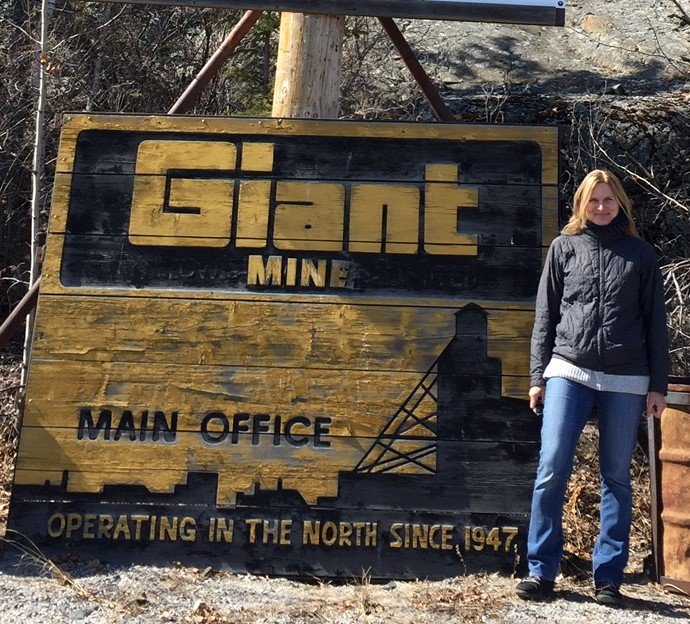
Since 2017, Renata has been managing the Health Effects Monitoring Program (YKHEMP) in Yellowknife, Ndilo, and Dettah, NT, under the leadership of Dr. Laurie Chan. This longitudinal cohort study aims to establish a baseline of contaminant exposure and potential health effects in the population, providing ongoing monitoring as the Giant Mine remediation activities progress. More information about the program can be found at www.ykhemp.ca.
Publications:
Chan HM, Hu XF, Cheung J, Rosol R, et al. “Cohort Profile: Health Effects Monitoring Program in Ndilo, Dettah, and Yellowknife (YKHEMP)” (in progress).
Rosol R, Powell-Hellyer S, Chan HM. “Impacts of decline harvest of country food on nutrient intake among Inuit in Arctic Canada: impact of climate change and possible adaptation plan”. International Journal of Circumpolar Health 2016, 75:31127. http://dx.doi.org/10.3402/ijch.v75.31127
Huet C, Rosol R, Egeland GM. “The prevalence of food insecurity is high and the diet quality poor in Inuit communities”. Journal of Nutrition 2012, 142:541-547. http://jn.nutrition.org/content/142/3/541.full.pdf+html
Rosol R, Huet C, Wood M, Lennie C, Osborne G, Egeland GM. “Prevalence of affirmative responses to questions of food security: International Polar Year Inuit Health Survey, 2007-2008”. International Journal of Circumpolar Health 2011, 70(5):488-497. http://www.circumpolarhealthjournal.net/index.php/ijch/article/view/1786...
Sharma S, Gittelsohn J, Rosol R, Beck, L. “Addressing the public health burden caused by the nutrition transition through the Healthy Foods North nutrition and lifestyle intervention programme”. Journal of Human Nutrition and Diet 2010; Oct 23 Suppl 1:120-127. http://onlinelibrary.wiley.com/doi/10.1111/j.1365-277X.2010.01107.x/full